By
George Makeri
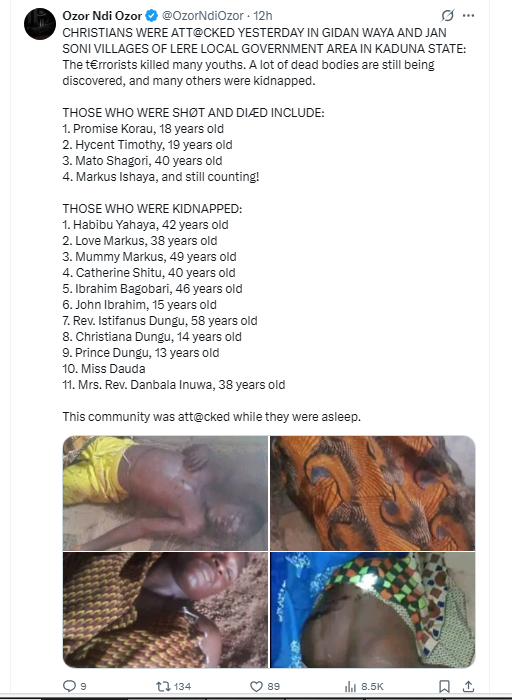
Although I suspect the opposition of orchestrating the Kurmin Wali mass abduction to make the government look bad, the handling of the incident by both Kaduna State and Federal authorities is not merely a failure of security; it is a masterclass in cognitive biases, institutional dishonesty, and the weaponization of power against a traumatized citizenry. What should have been a moment of urgent, transparent crisis response has instead exposed a pattern of behaviour that prioritizes image management over human lives, and political survival over truth.
First, let us dissect the cognitive biases and manipulative tactics deployed:
Confirmation Bias & Motivated Reasoning: Authorities were not interested in facts—they were invested in a narrative. Before any genuine investigation, the official position was to deny. The Commissioner of Police, the Local Government Chairman, and reportedly even manufactured “witnesses” were paraded to debunk the incident. This was not a search for truth; it was an exercise in political damage control, seeking only information that supported the pre-determined story: “nothing serious happened here.”
Authority Bias & Intimidation: When citizens, journalists, and community members dared to speak the truth—a truth later confirmed by the same police force—they were threatened with arrest. This is not governance; it is tyrannical bullying. Using state power to silence victims and critics during a kidnapping crisis is a profound moral and ethical failure. It signals that the government fears exposure more than it values rescue operations.
Post-Denial Symbolism—The “Condolence Visit”: After the denial collapsed under the weight of evidence, the Governor visited the community. Such a visit, while perhaps intended as a gesture of empathy, rings hollow and hypocritical when preceded by official lies and threats. It becomes not an act of solidarity, but a performance—an attempt to launder a tarnished image through photo opportunities and staged compassion.
Compare now two possible paths:
Path A (The Chosen Path):
Deny → Threaten critics → Finally admit under pressure → Pay a condolence visit.
Effect: The community receives a symbolic gesture from leaders who first called them liars and threatened them. Trust is not repaired; it is further eroded. The message sent: “We care about your pain only when we can no longer hide it.”
Path B (The Responsible Path):
Immediately acknowledge → Mobilize all resources → Communicate transparently → Publicly apologize for initial denial and threats → Then visit the community.
Effect: An apology would have acknowledged wrongdoing, validated the public’s frustration, and demonstrated humility. It would have drawn a clear line between failure and accountability. The visit would then be seen as part of a sincere process of repair, not a public relations cover-up.
The refusal to apologize—choosing instead to move straight to “condolence”—is a calculated insult. It implies that the government’s dignity is more important than the citizens’ right to truth. It suggests that threats against victims are not serious enough to warrant remorse. An apology would have cost nothing in substance, but it would have meant everything in restoring moral authority and social trust.
Instead, what we witness is a government that believes it can lie with impunity, intimidate without consequence, and then sanitize its image through staged empathy. This is not governance; it is psychological manipulation. It treats citizens not as stakeholders in their own security, but as obstacles to a polished narrative.
Until Nigerian leaders at all levels learn that true strength lies in honesty, humility, and accountability—not in denial, threats, and empty visits—security will remain elusive. The people of Kurmin Wali, and indeed all Nigerians, deserve leaders who fear failure more than they fear embarrassment and who value lives more than they value loyalty to a flawed story.
We do not need leaders who visit only after they are caught lying. We need leaders who tell the truth from the start—and, when they fail, have the courage to say, “We were wrong. We are sorry. We will do better.”
Anything less is an affront to the dignity of every citizen living in fear.