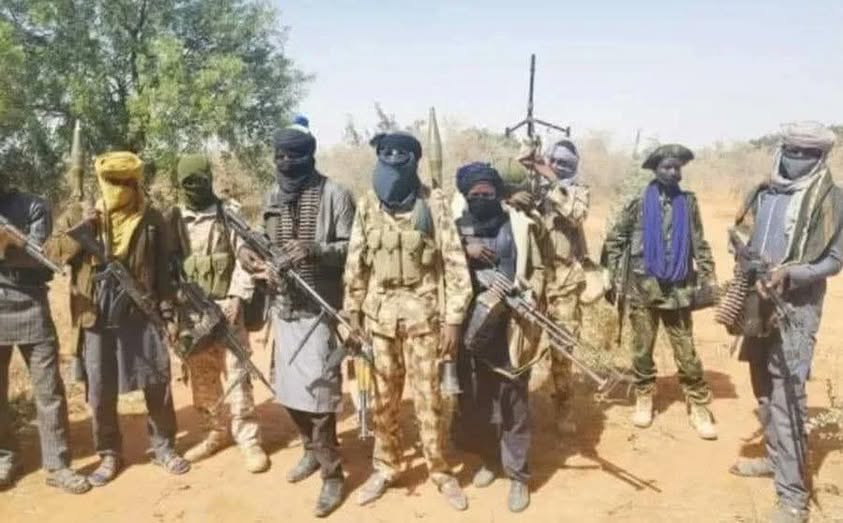
There is a dangerous distance between political debates about insecurity and the lived reality of those caught in its grip. For many, banditry is a headline, a statistic, or a talking point. But for rural communities, it is a force that dismantles entire ways of life—quietly, completely, and often irreversibly.
Imagine a life built on simplicity and dignity. You wake before sunrise, tend to your farm, harvest your crops, and provide for your family. Your children grow up learning the same rhythms your parents taught you. You marry, raise a family, pay your bills, and live within a system that, while modest, is stable and predictable. This is the rural reality for millions—life centered on land, labor, and legacy.
Now imagine that life being torn apart overnight.
Bandits arrive. Fear replaces routine. The fields you once cultivated become too dangerous to approach. The home you built becomes unsafe. And suddenly, survival means running—leaving behind your harvest, your livestock, your memories, and everything you have ever known.
This is not a hypothetical scenario. It is the lived experience of countless people who now wander in search of safety, sleeping wherever they can, depending on the goodwill of others just to eat. These are not victims of war between nations. They are citizens displaced in peacetime—internally displaced persons (IDPs) in their own country.
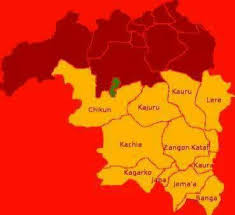
In parts of Kachia, the scale of this tragedy is stark. Entire communities have vanished. Villages that once echoed with life, laughter, and the sounds of daily activity now stand silent—abandoned not by choice, but by force.
The following 28 villages, once vibrant with people, culture, and productivity, are now completely deserted:
Ungwan Kuka, Ungwan Pah, Attara, Kurmin Jah, Kintaro, Ungwan Palapala, Ankuro, Kurmin Zaki, Impi Kuturmi, Ikubiya, Ungwan Lalle, Ungwan Alewa, Dutse, Kigwale, Ungwan Bawa, Ungwan Bala, Ungwan Waje, Ungwan Baba, Katonbisa, Gidan Dare, Tsakiya, Gidan Obere, Baba Maimota, Tsonin Dodo, Gidan Dandoka, Gidan Zamani, Gidan Doigara, and Kurmin Taba.
These are not just names on a list. They are erased homes, interrupted dreams, and broken communities.
And this is where the “multiplier effect” of banditry becomes clear.
The impact goes far beyond immediate violence. When farmers flee, food production collapses. When villages empty, local economies die. When families scatter, education is disrupted, healthcare becomes inaccessible, and social structures weaken. Poverty deepens, hunger spreads, and dependency grows. What begins as insecurity quickly multiplies into economic crisis, humanitarian disaster, and generational trauma.
Yet, despite this cascading devastation, some still reduce insecurity to politics—debating, deflecting, or downplaying the suffering of those affected.
But there is nothing abstract about this crisis.
It is a mother unable to feed her children because her farmland is now a danger zone.
It is a father stripped of his ability to provide.
It is a child growing up without stability, education, or a sense of home.
The true cost of banditry cannot be measured in numbers alone. It is measured in lost futures, abandoned heritage, and the slow erosion of hope.
Until this reality is fully acknowledged—not as a political issue, but as a human one—these empty villages will remain a haunting reminder of what happens when insecurity is allowed to persist.
And for those who have fled, survival continues… but life, as they once knew it, is gone.